
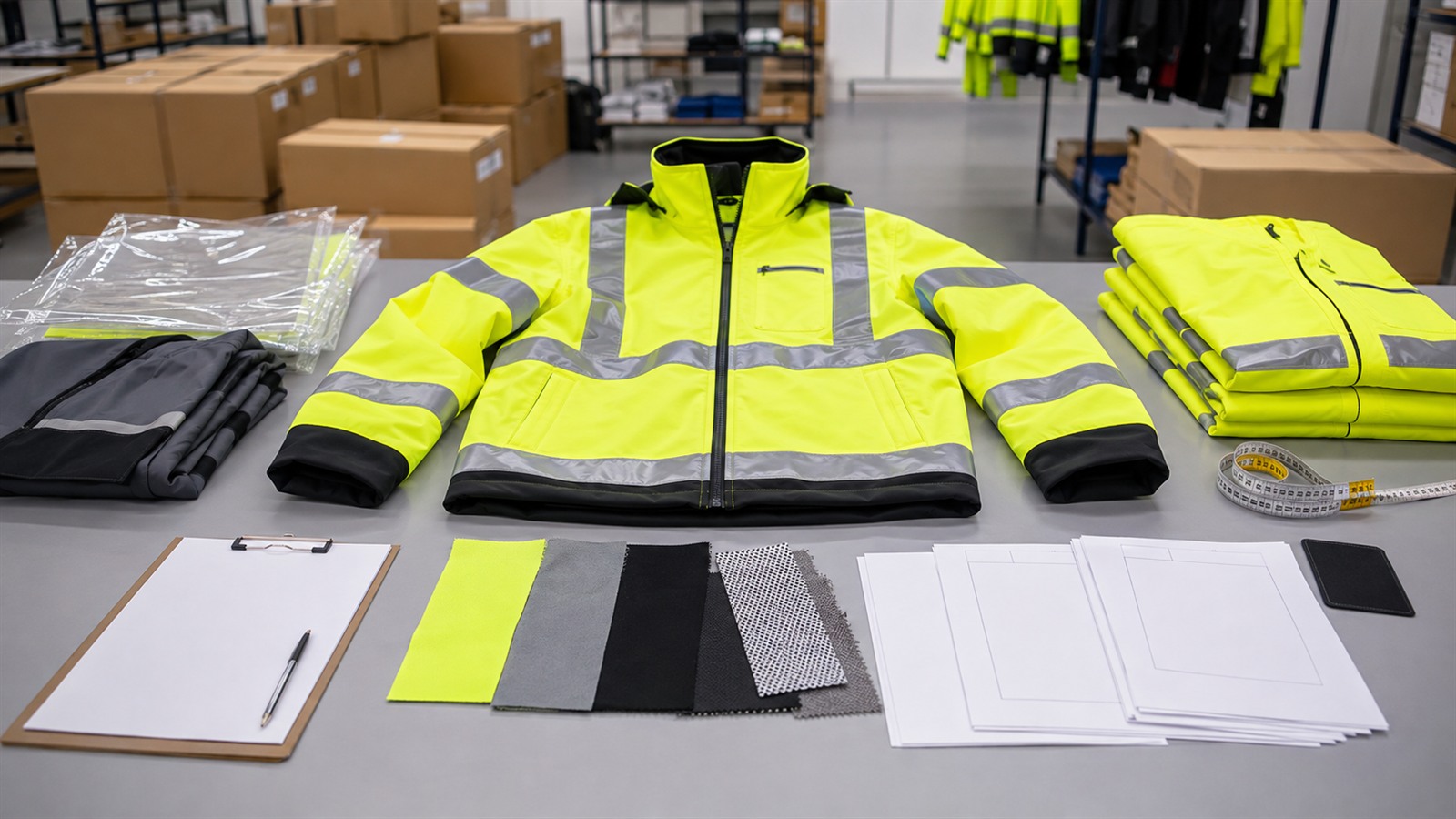
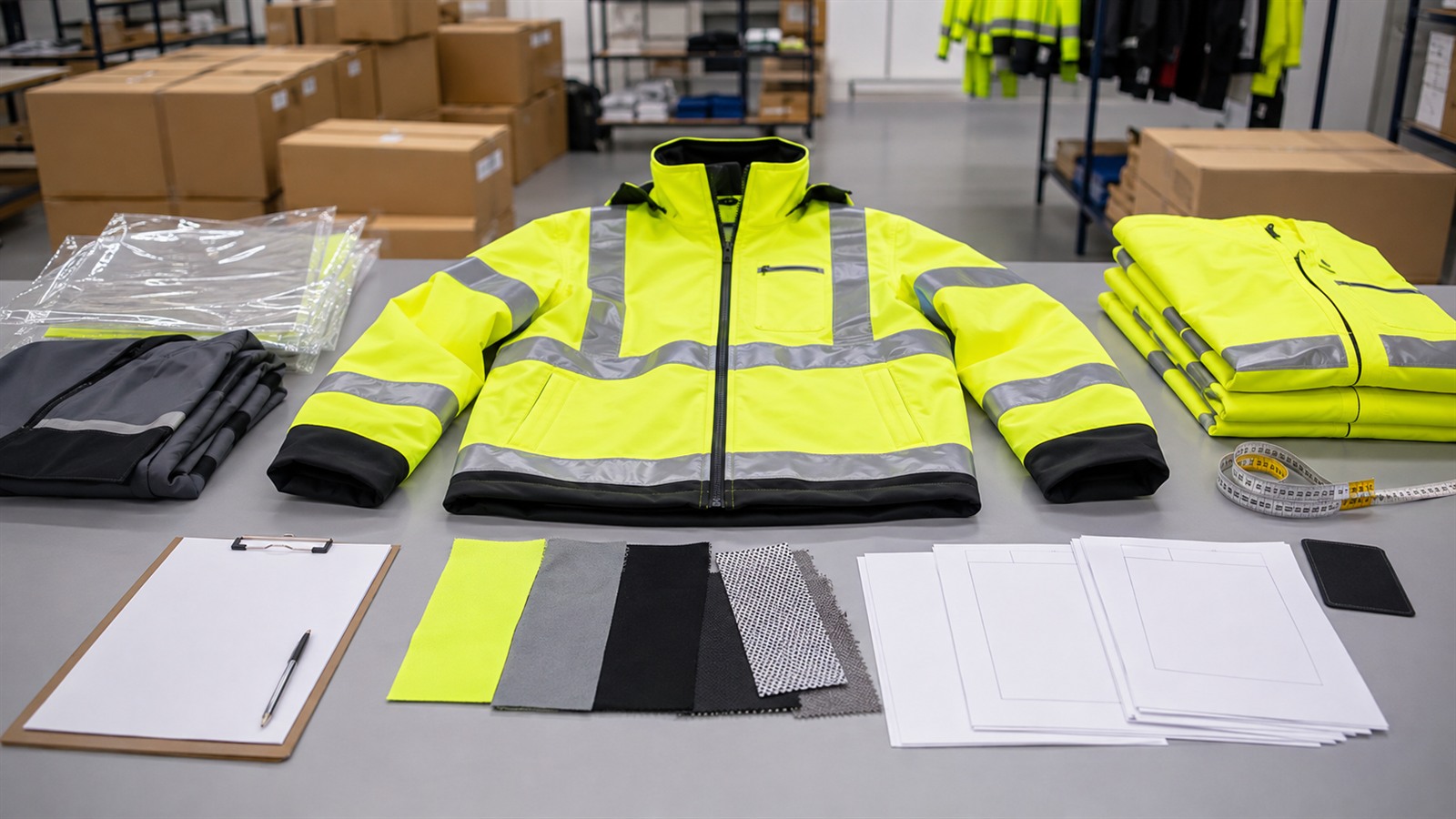
Choosing a safety jacket supplier for bulk OEM orders requires more than comparing unit prices. A supplier must understand worksite use, reflective tape placement, logo customization, size ratios, sample approval, packaging, and documentation needs.
This safety jacket supplier checklist is written for B2B buyers preparing OEM or wholesale orders. It helps buyers qualify a factory, prepare a complete RFQ, and reduce revisions during sampling or production. Project requirements may vary by job site, contract, jurisdiction, and safety program, so buyers should confirm target standards and request documentation where applicable.
Whether a buyer searches for a safety jacket supplier, safety jacket manufacturers, safety jackets suppliers, or a reflective apparel factory, the evaluation should stay focused on production fit, documentation, sample control, and order-specific communication.
Intro CTA: If you are building a supplier shortlist, review the company background on our factory page, compare OEM options through custom workwear services, or send a supplier evaluation request through Get a Safety Jacket Supplier RFQ Review.
Before evaluating suppliers, define what the order needs to accomplish. A rain jacket for road crews is different from an insulated jacket for winter contractors, a lightweight bomber for logistics teams, or a private-label reflective jacket for distributors.
Key starting questions include who will wear the jackets, where they will work, what weather exposure is expected, whether the jackets need to fit over other garments, and whether the order must plan around ANSI/ISEA 107, EN ISO 20471, or an internal company standard.
Buyers should also decide whether they need a standard style with logo customization or a deeper OEM program with adjusted fabric, tape layout, pockets, labels, packaging, and carton marks.
Use this scorecard to compare suppliers on the same criteria and make gaps visible before a purchase order is placed.
| Evaluation Area | What to Check | Why It Matters | Buyer Notes |
|---|---|---|---|
| Factory capability | Jacket types, sewing capacity, reflective workwear experience, OEM process | Confirms whether the supplier can handle the order scope | Ask for relevant production examples |
| Material options | Hi-vis shell fabrics, coatings, insulation, lining, contrast panels | Affects comfort, durability, weather protection, and cost | Match fabric to worksite conditions |
| Reflective tape knowledge | Tape width, placement, sewing quality, heat-transfer options | Supports visibility planning and sample review | Confirm target class or standard before approval |
| Customization support | Logo methods, private labels, patches, hangtags, carton marks | Important for contractor branding and distributor programs | Provide vector artwork and placement notes |
| Sample process | First sample, revised sample, pre-production sample, approval records | Reduces risk before bulk cutting and sewing | Keep approved sample as production reference |
| Quality control | In-line checks, final inspection, measurement tolerances, packing checks | Sample approval does not replace bulk production QC | Define inspection points before production |
| Communication | Clear questions, written specifications, realistic lead time | Prevents misunderstanding and late changes | Watch for vague answers or unsupported claims |
| Documentation | Product specs, available test reports, declarations, photos | Helps buyers meet contract or internal review needs | Request documentation where applicable |
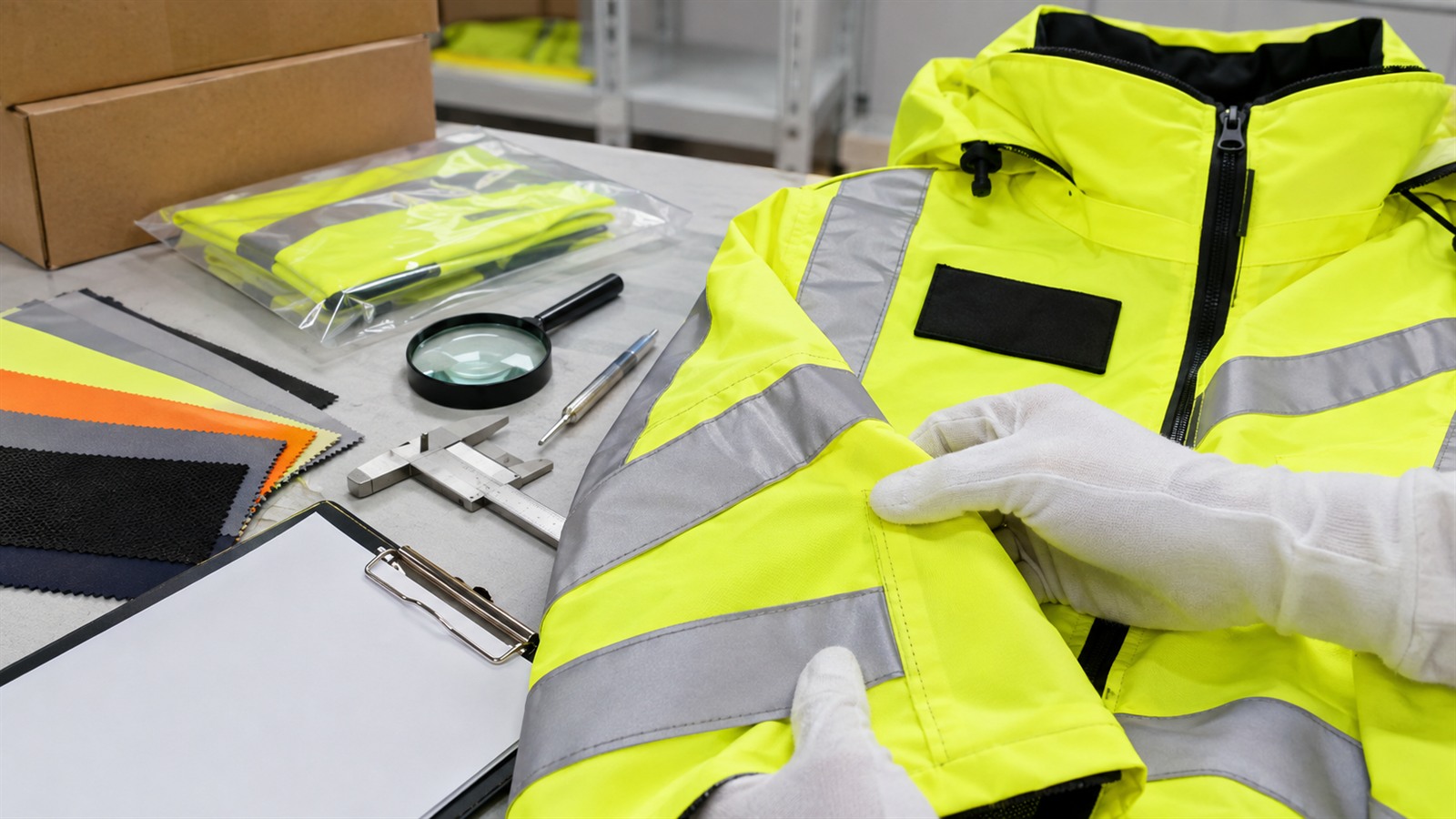
A safety jacket supplier should be compliance-aware, but buyers should be cautious with broad claims. A factory may be able to support products planned around ANSI/ISEA 107 or EN ISO 20471, but the final customized garment still needs the target standard, class, material areas, reflective layout, and documentation reviewed.
Avoid assuming that a catalog jacket, a similar sample, or a general certificate applies to every OEM variation. Changes to fabric, contrast panels, reflective tape, pocket placement, or logo size can affect the garment design.
Useful RFQ wording includes: “Please confirm whether this design can support the target standard,” and “Please advise if the logo placement affects required visible material.”
The supplier should have relevant product experience for your order type. For waterproof reflective jackets, ask about coated fabrics, seam sealing, storm flaps, cuffs, and hood construction. For winter jackets, ask about padding weight, lining options, sleeve comfort, and fit over layers. For resale programs, ask about labels, barcode stickers, individual bags, and carton markings.
Buyers comparing styles should define the jacket type, weather exposure, and target use case before sending an RFQ.
For OEM orders, supplier fit also depends on change control. A practical supplier should convert buyer notes into a written specification and keep the approved sample aligned with bulk production.
A complete RFQ helps the supplier quote accurately. Include the following details where available:
Mid-article CTA: If you already have a draft RFQ, send your specification, quantity, size mix, and logo files through Safety Jacket Supplier RFQ Review. Our team can review the details before sampling.
Supplier evaluation should move from general capability to order-specific risk.
Start with production fit: “Have you made this type of safety jacket before?” “Which fabric options fit the worksite and season?” “What MOQ applies to this material and color?” These questions show whether the supplier is quoting from experience or guessing from a reference image.
Then ask about customization and documentation: “Which logo method is recommended for this fabric?” “Can the logo placement avoid reflective tape and required visible material?” “What test reports or product documents are available?” “Can you provide production photos or inspection records?” A supplier does not need to promise every certificate for every order, but they should state what can be supported and what must be confirmed.
Finally, confirm sample timing, bulk production timing, material booking, approval deadlines, and the process for artwork, size ratio, or packaging changes after sample approval.
The sample is where supplier claims become visible. Check fabric, color, reflective tape alignment, stitching, zipper quality, pockets, logo placement, label accuracy, and fit. For cold-weather jackets, test whether the garment fits over expected work layers.
Sample approval reduces risk, but it does not replace bulk production QC. Buyers should still agree on in-line inspection, final inspection, measurement tolerance, packing verification, and photo records where needed. The approved sample should become the production reference for the factory and buyer.
If the project has compliance requirements, confirm target standard and documentation before approving the sample. Record any uncertainty in the approval notes.
Be cautious when a supplier quotes without asking about worksite use, target requirement, fabric, tape layout, size mix, or logo placement.
Other red flags include vague certification claims, refusal to provide sample details, unclear MOQ rules, no written packing instructions, inconsistent lead time answers, and reluctance to discuss inspection. These issues increase the need for written confirmation before payment or production.
A safety jacket supplier checklist helps B2B buyers compare factories on the details that affect bulk OEM results: specification control, reflective workwear experience, compliance awareness, logo and label support, sample handling, QC, documentation, and communication.
Use this checklist before requesting final pricing. Review our factory background, compare Custom OEM workwear services, or submit your requirements through Get a Safety Jacket Supplier RFQ Review.
Start with product fit, factory capability, target requirement, fabric options, reflective tape knowledge, sample process, and quality control. A supplier should understand the worksite use before quoting.
Include product type, worksite use, target standard, fabric, reflective tape layout, logo details, size mix, quantity, sample needs, packaging, destination, and delivery date.
Buyers should avoid broad assumptions. A supplier can support planning around a target standard, but the final customized design and documentation should be confirmed for the specific order.
Compare prices only against the same specification. Check fabric weight, reflective tape type, lining, logo method, packaging, sample cost, documentation needs, and shipping terms before deciding.
A physical sample is strongly recommended for OEM or logo orders. It helps confirm fit, fabric, tape placement, branding, labels, packaging, and workmanship before bulk production starts.
Request product specifications, available test reports, sample photos, inspection requirements, packing details, and any documents tied to the target standard or contract where applicable.
Browse safety jackets, compare certification requirements, or send your quantity and logo requirements for a bulk quote.

What are multi-pocket safety vests? Multi-pocket high-visibility work vests are work vests that are designed to contain many openings to enable the...
Read More: The Ultimate Guide to Multi-Pocket Safety Vests
Why Invest in Custom Safety Vests with Your Logo? Companies in the construction sector, logistics, utility, event management, field services, and...
Read More: Custom Safety Vests with Logo: The Smart Choice for Safety, Branding, and Compliance
The workplace safety of the last ten years has developed a lot, and by 2026, the high-visibility personal protective equipment (PPE) will be of vital...
Read More: The Ultimate Guide to Fluorescent Yellow Safety Vests for 2026: Choosing and the Future of High-Visibility PPE