
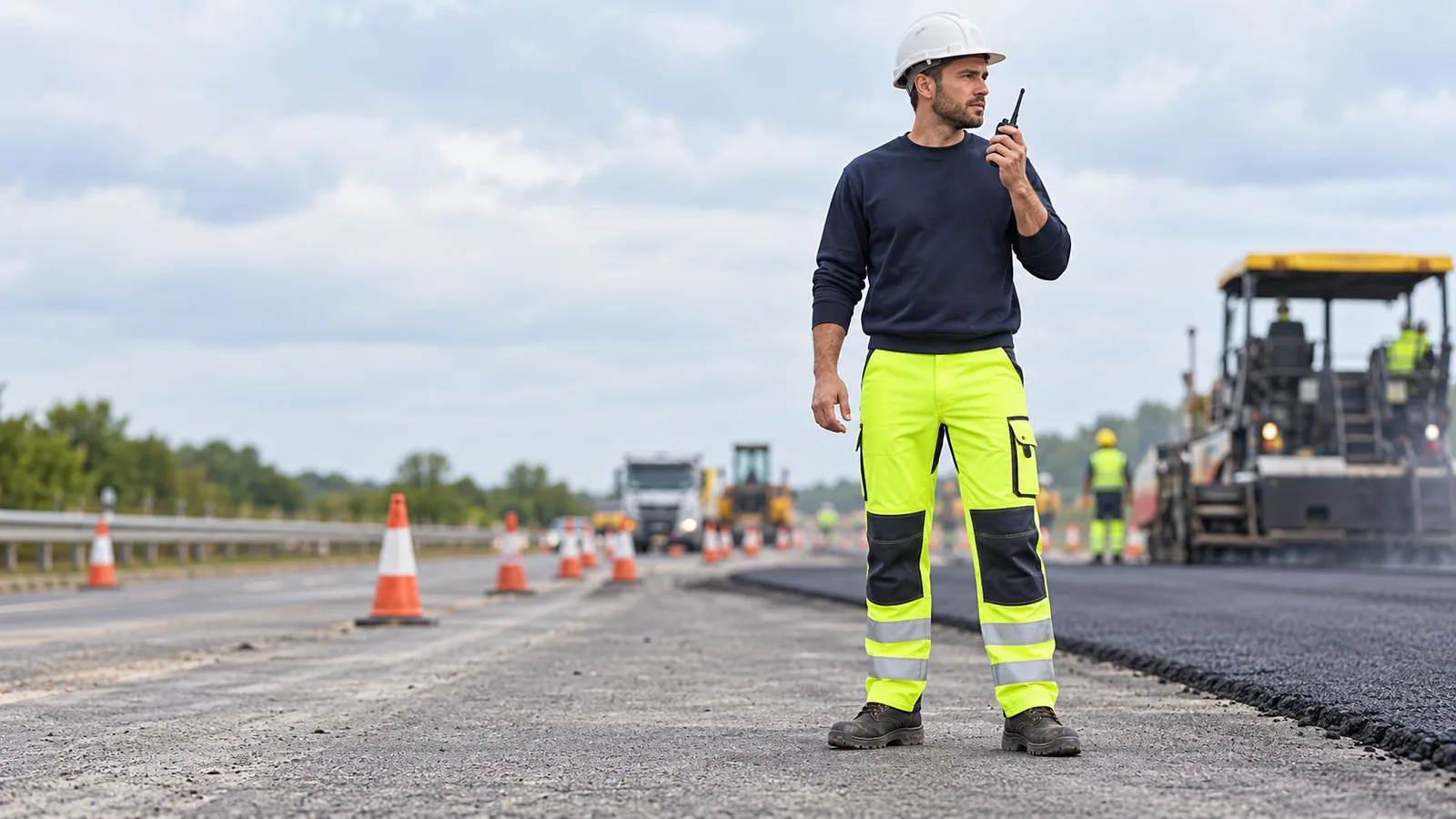
Buying hi vis work trousers in bulk is a different exercise from ordering everyday workwear. Road, rail and warehouse crews all need high-visibility bottoms, but wear them out at different speeds. Hi vis work trousers are work pants that combine fluorescent background fabric with retroreflective striping so that the wearer’s lower body stays conspicuous under daylight, headlight and fixed site lighting — unlike ordinary work pants, which are engineered for durability and storage but not for conspicuity. For a full size chart and specification sheet, send our team your bulk inquiry.
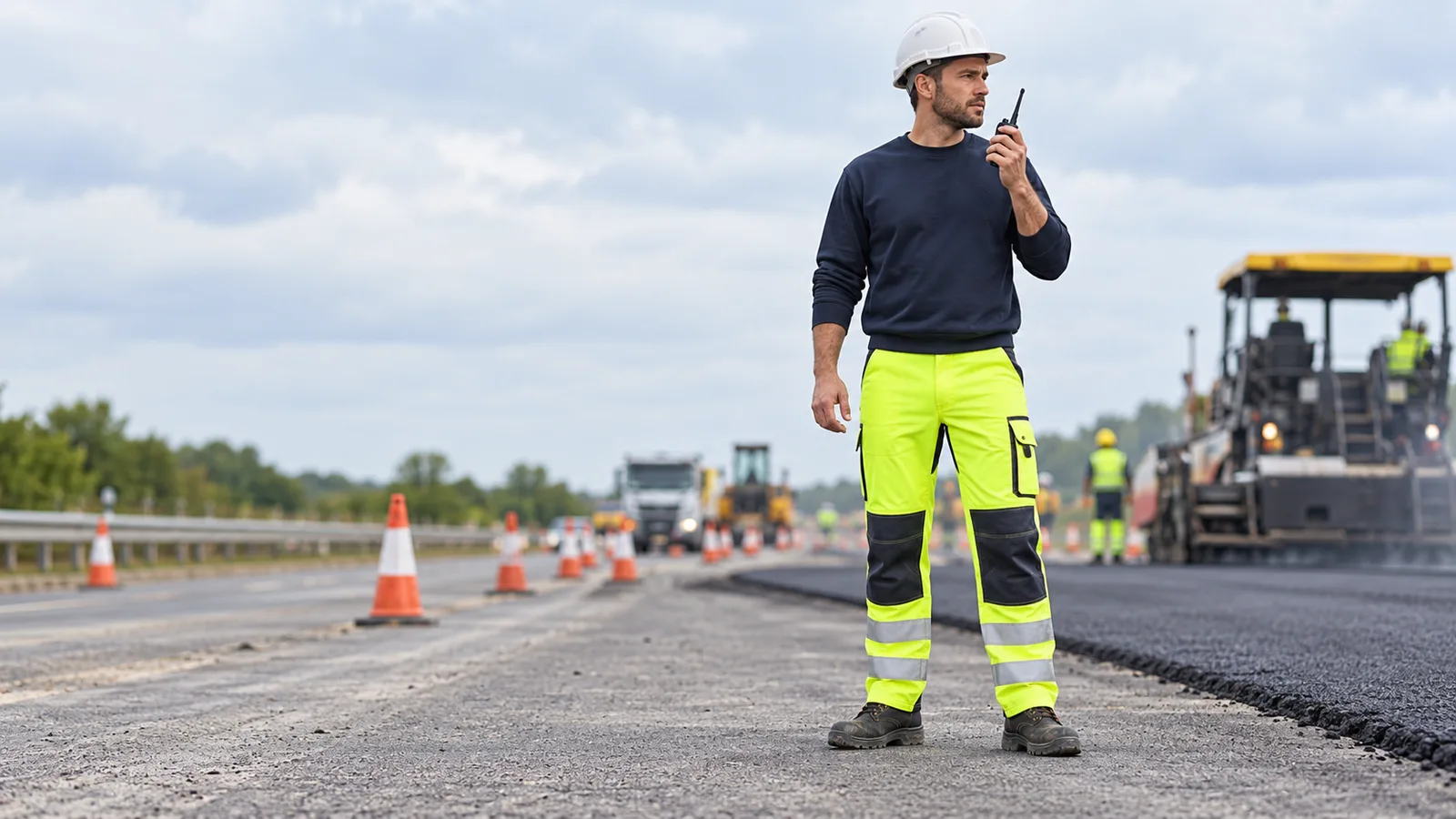
Hi vis work trousers — often listed as reflective pants or, in American English, hi vis work pants — are the lower half of a high-visibility ensemble. Fluorescent background fabric makes the legs easy to pick out in daylight; retroreflective bands return light from headlights and work lights after dark. The category covers three product types: standard trousers for dry work, waterproof trousers for wet conditions, and bib-and-brace styles extending coverage to the chest. Compare all three in our reflective safety pants wholesale catalogue.
“Trousers” is British, “pants” American, for the same garment — the spelling tells you nothing about quality. What matters is the specification under the label: fabric, stripe configuration, reinforcement and sizing. When comparing quotations across regions, map both spellings onto one agreed spec sheet.
A jacket or vest leaves the lower body in ordinary fabric. Hi vis trousers extend fluorescent and reflective coverage to the moving legs, helping drivers and plant operators recognise a person, not an object. Trousers can raise the visibility level of the whole outfit when worn with a matching top — exact class combinations depend on the standard in force, so confirm the ensemble rules in your contract before ordering. See our ANSI Class 2 vs Class 3 explainer for the grading rules.
Specifications drive unit price and service life. For teams sourcing work pants with reflective stripes, the variables below explain most gaps between quotations.
Weight and reinforcement set service life on site. Lighter constructions keep indoor crews comfortable; heavier fabrics and reinforced knees repay their cost wherever trousers meet concrete or repeated kneeling. Exact weights and abrasion results vary by mill and test method, so treat catalogue numbers as starting points and validate with field samples.
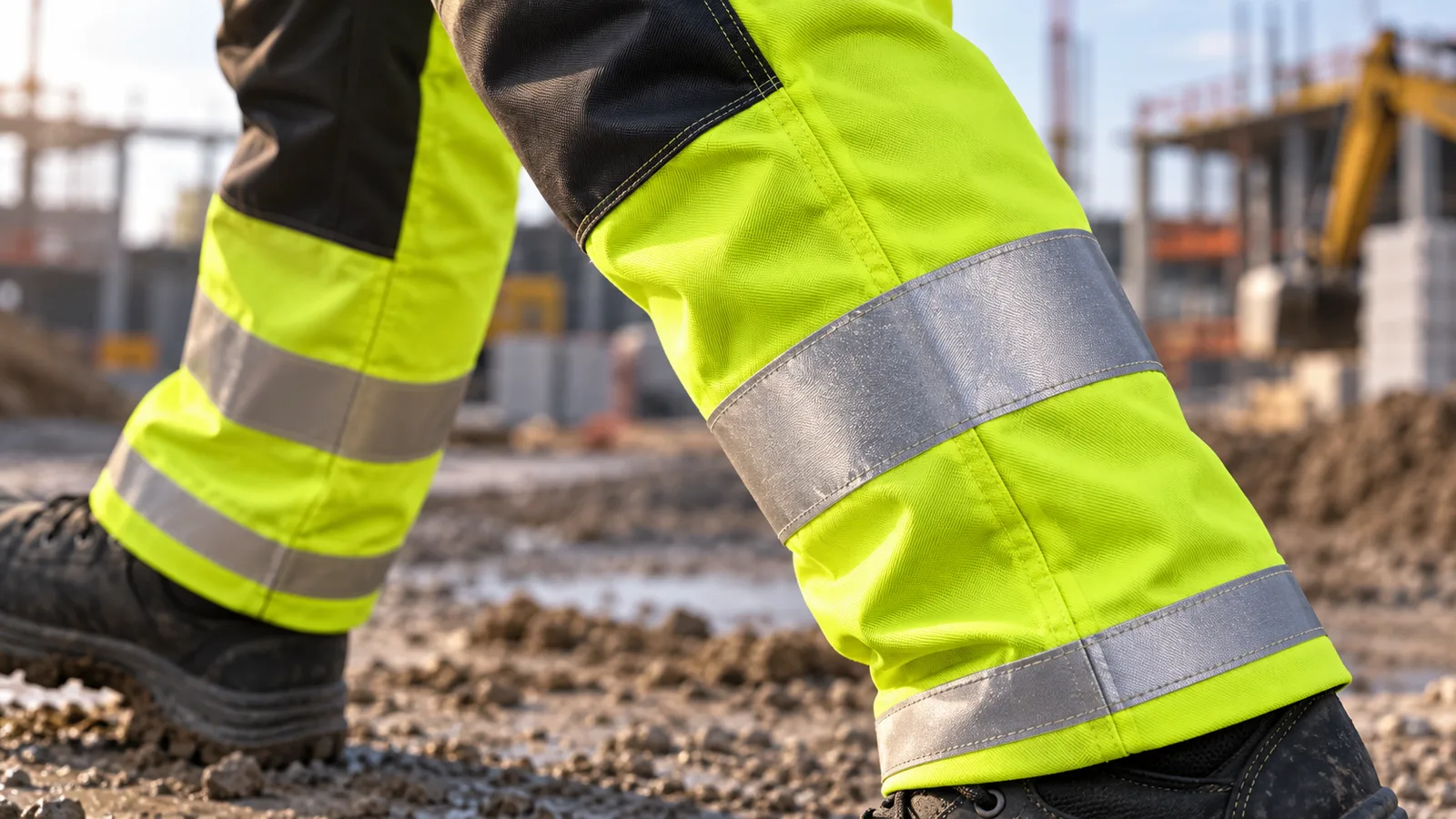
Retroreflective stripes do the night work: bands typically circle the leg at calf or ankle height — where headlight beams reach first and movement is greatest — often with contrast panels at the knee. Placement and tape width are set by the standard your contract references, so compare on paper, not by eye: request each supplier’s stripe drawing and check it against the standard.
Pockets and adjustability decide whether trousers get worn or worked around. Cargo layouts keep tools off the floor; adjustable waists and extended sizes cover a mixed crew over winter thermals. If your teams carry equipment on the leg, compare our multi pocket work pants with reflective stripes, pairing cargo capacity with full hi vis construction.
| Spec | Standard hi vis trousers | Waterproof trousers | Bib and brace | How to decide |
|---|---|---|---|---|
| Fabric and reinforcement | Breathable woven fabric, reinforced knees | Waterproof shell, sealed seams | Same, plus chest panel | Reinforcement by abrasion, shell by rain |
| Reflective configuration | Leg-level retroreflective bands | Same, on rain fabric | Bands on legs and torso | Verify against the applicable standard |
| Pockets and closures | Multi-pocket cargo layout | Fewer pockets, storm flaps | Bib and hip pockets | Count what crews carry |
| Fit and layering | Adjustable waist, over base layers | Cut to layer over trousers | Braces hold fit without a belt | Test over thickest layer |
| Best suited to | Dry indoor and mild outdoor work | Wet outdoor shifts | Long wet or dirty shifts | Let site conditions pick |
Not sure which type fits each crew? Send us your crew mix and request a quotation by trouser type.
Rain is hard on high-visibility clothing: wet fluorescent fabric loses apparent brightness, and soaked work trousers get abandoned mid-shift. For outdoor crews, reflective waterproof trousers keep the visibility function alive in wet weather — a coated or laminated shell with sealed seams, worn over work trousers during the shift. The buying judgment is exposure-based. Where crews work through frequent rain, dedicated rain trousers protect both the worker and the trousers underneath, and total replacement cost usually falls; where rain is occasional, a held reserve may be enough. Match the shell to the climate your crews actually work in, not the worst storm on record. Current styles are on our waterproof reflective rain pants page.
Waterproof specification for the upper body — coatings, seam taping, hood design — is a separate decision with its own failure points. We cover it in detail in our procurement guide to waterproof reflective jackets, so this page stays focused on the lower half and on matched sets.
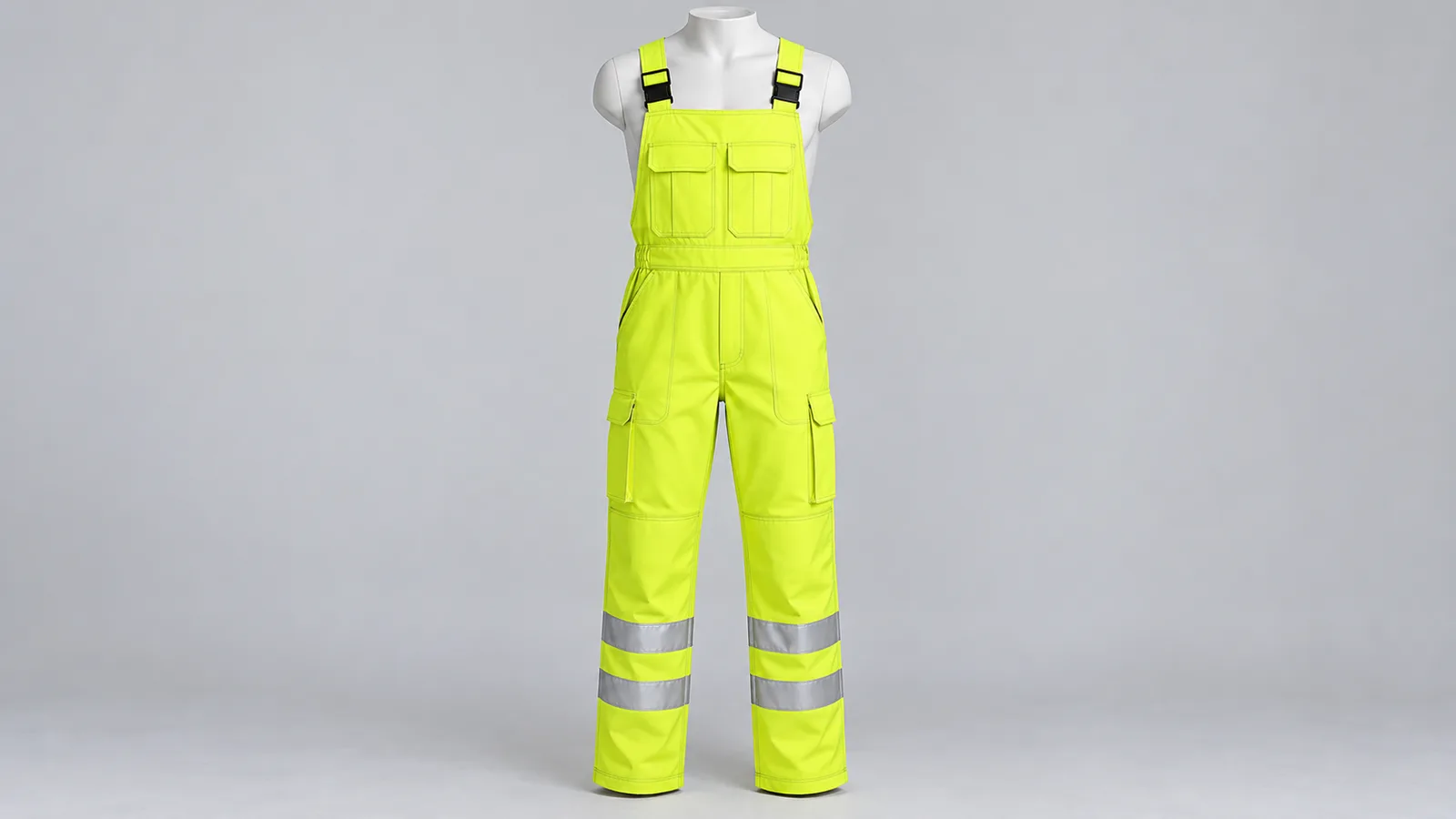
A hi vis bib and brace takes rain trousers further: fabric extends up over the chest and back, held by braces over the shoulders, so the torso stays protected without a jacket and the garment stays put through bending, crouching and climbing. Crews in persistent rain, mud or splash — utilities, construction, agriculture — are the natural users. Because it covers more body area, a bib and brace also keeps underlayers dry where jackets ride up. Ordering a matched hi vis rain suit set keeps colour and reflective tape consistent across both halves.
The same trouser can be over-specified for one site and under-specified for the next. Start from the dominant environment, then spec to it.
Road and traffic crews work within metres of moving vehicles, often at night and in low-angle headlight. Durability comes first: fabrics that survive contact with road surfaces and equipment, with leg-level reflective bands that stay legible in headlight sweep. Night shifts run colder and weather changes mid-shift, so plan layers. Visibility requirements for roadside work are set by the authority having jurisdiction over each project, so confirm the ensemble your contract expects before you order.
Rail infrastructure owners typically publish their own high-visibility clothing rules for trackside work, which can differ from general road guidance. Our hi vis guide for railway workers covers that landscape — start there, and require certification documents for any trouser destined for the trackside.
Inside the warehouse the risks are racking corners, reversing forklifts and dock traffic under mixed lighting. Breathability and fit usually outrank weather protection: lighter fabrics, cargo pockets for scanners and tools, and leg-level reflective tape that reads in forklift headlights at aisle ends. If dock doors stay open in winter, add a water-resistant option to the same order. Many warehouse programs specify hi vis vests for the torso — our bulk RFQ guide for ANSI Class 2 safety vests covers that half — and trousers can match the vest colour and tape.
Sizing errors are the most common reason bulk workwear sits unworn. Build the order from a real headcount with a size distribution survey — mixed crews generally need a wider range than a retail curve, including extended sizes — and decide early where women’s fits enter the programme. Trousers are among the fastest-wearing items in a hi vis kit, so set a replacement cadence and carry spares. For vendor-side diligence on any bulk order, our supplier checklist for bulk safety jacket orders walks through the same checks.
They can. Trousers can raise the visibility level of the whole outfit when worn with a matching top — exact class combinations depend on the standard in force, so confirm the ensemble rules in your contract before specifying. See our ANSI Class 2 vs Class 3 explainer.
“Trousers” is British usage, “pants” American, for the same product, and both appear side by side in international supply catalogues. Compare quotations by specification — fabric, stripe configuration, reinforcement, sizing — not by spelling, and have suppliers quote against one agreed spec sheet naming both garment terms.
Judge by rainfall frequency and shift length. If crews work through regular rain, reflective waterproof trousers protect both the worker’s visibility and the trousers underneath, and total replacement cost usually falls. For occasional showers, a smaller reserve may be cheaper — see our waterproof reflective rain pants page.
A bib and brace is a trouser with a chest panel held up by shoulder braces — torso coverage without a jacket that stays in place through bending and climbing. Choose it for long shifts in rain, mud or splash, or order a matched hi vis rain suit set covering both halves.
Yes. As an OEM manufacturer we apply logos by printing or embroidery, positioned to avoid background material and reflective tape so branding never trades against visibility. Agree method and placement at sampling — our custom safety vests with logo guide covers the same choices for trousers.
Start from the infrastructure owner’s clothing rules for trackside work, which may specify garment types and colour policy, then require certification documents for every candidate trouser. Our hi vis guide for railway workers covers the landscape — request the certification file before the order, not after.
Hi vis work trousers reward buyers who specify before they shop: match fabric and reinforcement to the worksite, confirm stripe configuration against the applicable standard, choose between standard, waterproof and bib-and-brace styles by real weather exposure, and plan sizes from a headcount survey rather than a guess. Send your crew mix, size distribution and target standards to our team, and request a full quotation for your bulk hi vis trouser order.
Browse safety jackets, compare certification requirements, or send your quantity and logo requirements for a bulk quote.
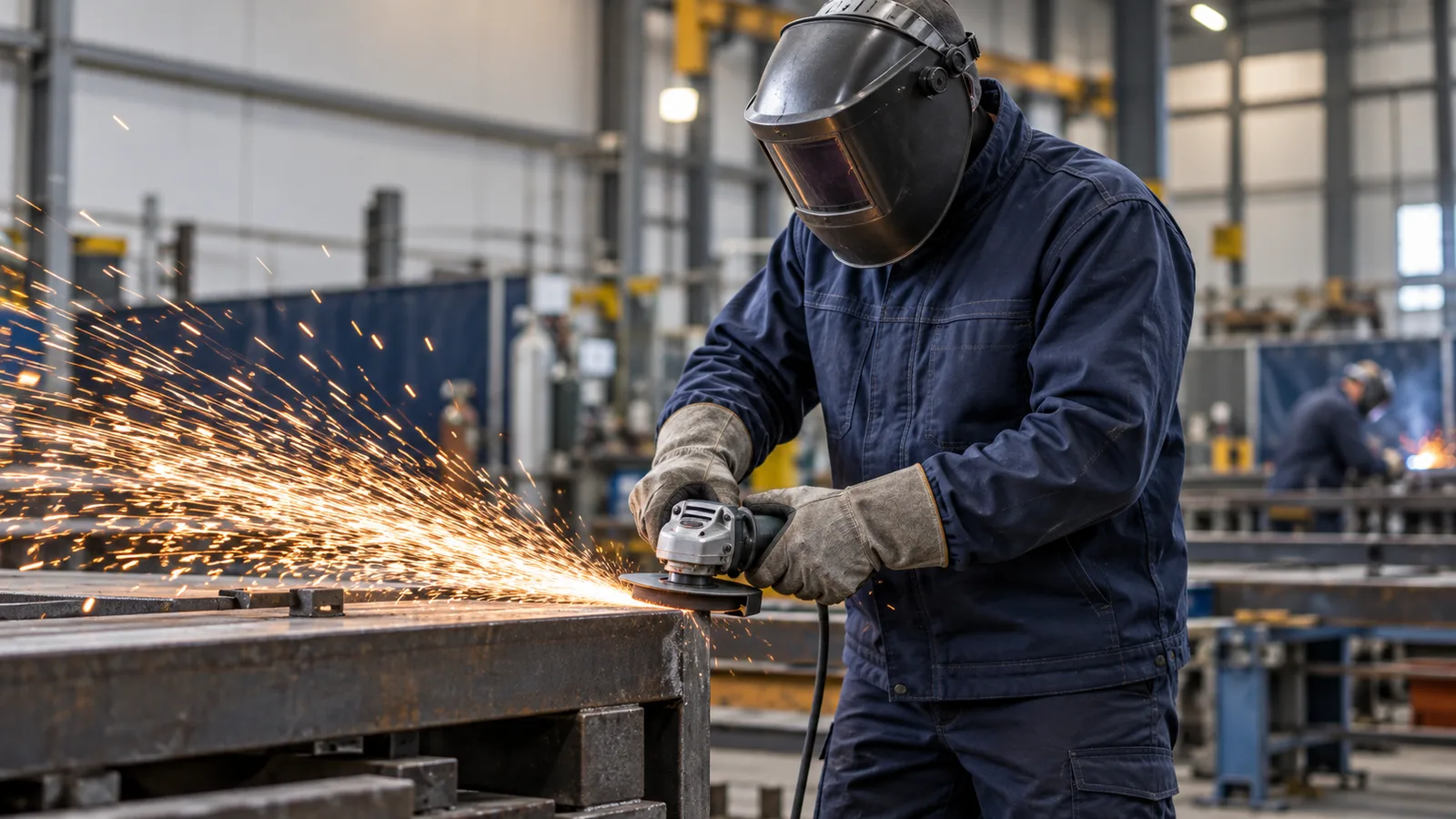
Source FR jackets, vests and coveralls for welders, electricians and utility crews. Specs, certifications and supplier checks for bulk OEM orders.
Read More: Flame Resistant Safety Jackets: Buying & Compliance Guide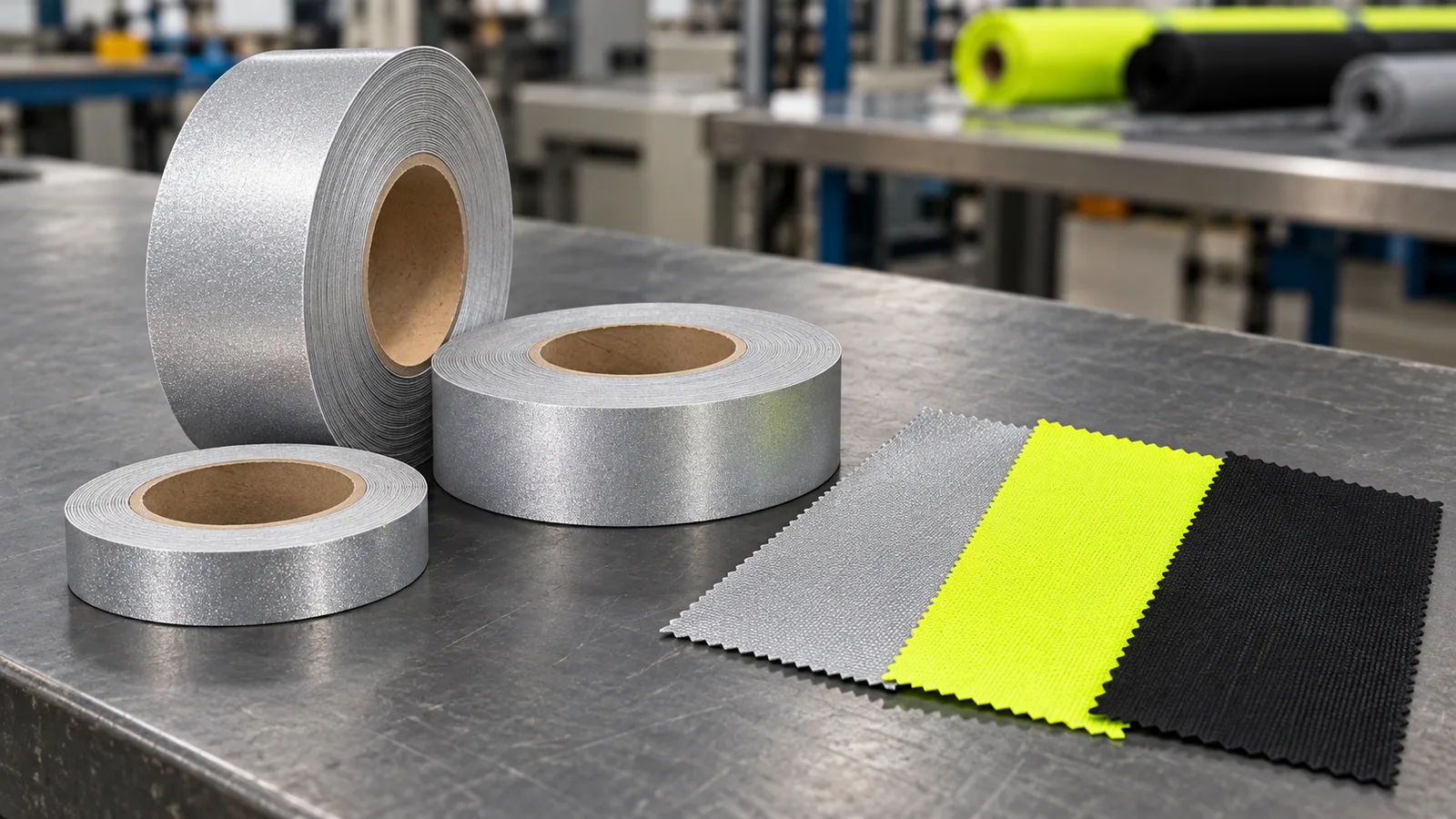
Buying reflective tape and hi vis fabric for garments or OEM production: specs, widths, durability testing and a supplier evaluation checklist.
Read More: Reflective Tape & Fabric Procurement Guide for Workwear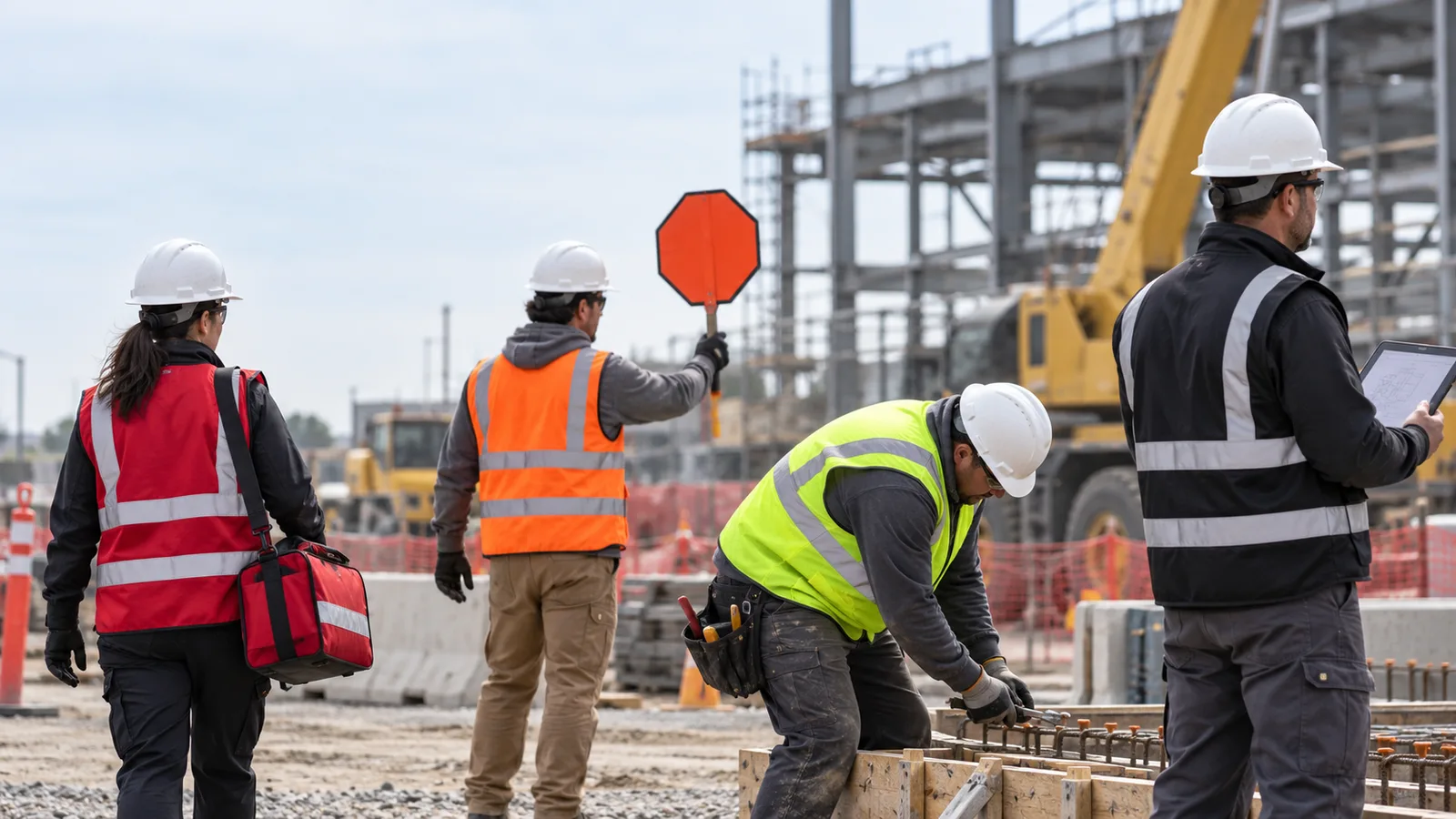
A B2B guide to safety vest color codes: red for emergency crews, orange for road work, black for branded teams – order color-coded vests in...
Read More: Safety Vest Color Codes: What Each Color Means at Work