
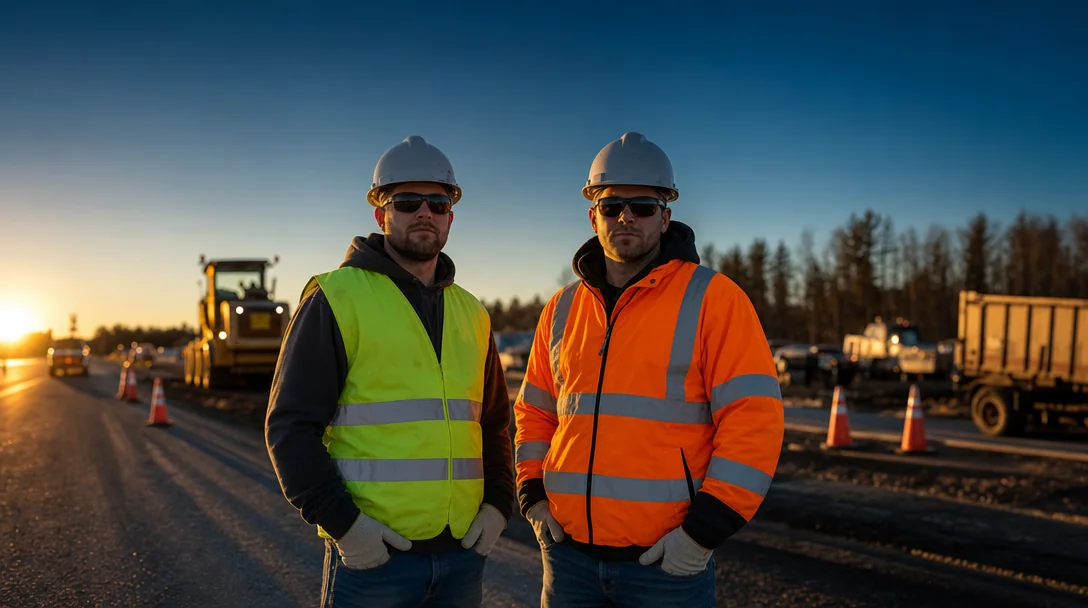
If your team works near vehicles, equipment, or low-light conditions, choosing between ANSI Class 2 and Class 3 hi-vis safety jackets matters for both compliance and worker safety. The wrong class can mean inadequate visibility for the hazard — or unnecessary cost for a garment that exceeds what your worksite actually requires.
As a safety jacket manufacturer with nearly two decades of experience supplying B2B buyers worldwide, we regularly see procurement teams, safety managers, and contractors wrestling with this exact decision. This guide breaks down the differences between ANSI Class 2 and Class 3 safety vests and jackets in plain language, with a comparison table, use-case recommendations, and compliance considerations — so you can specify the right garment for your team on the first order.
Browse our certified safety jackets to see garments that meet both ANSI and EN ISO standards.
The ANSI/ISEA 107-2020 standard — published by the International Safety Equipment Association — defines the performance requirements for high-visibility safety apparel in the United States. It covers the amount of fluorescent background material, the placement and area of retroreflective tape, and the garment types that achieve each performance class.
The standard defines three visibility classes:
For B2B procurement teams, the Class 2 vs Class 3 decision is the most common specification point — and the one with the biggest impact on both compliance and budget.
The table below summarizes the key differences between ANSI Class 2 and Class 3 safety garments. Use this as a quick reference before diving into the detailed use-case guidance.
| Feature | ANSI Class 2 | ANSI Class 3 |
|---|---|---|
| Minimum background material (commonly referenced under ANSI/ISEA 107-2020) | approximately 775 sq in (0.50 m²) | approximately 1,240 sq in (0.80 m²) |
| Minimum reflective tape area (commonly referenced under ANSI/ISEA 107-2020) | approximately 201 sq in (0.13 m²) | approximately 310 sq in (0.20 m²) |
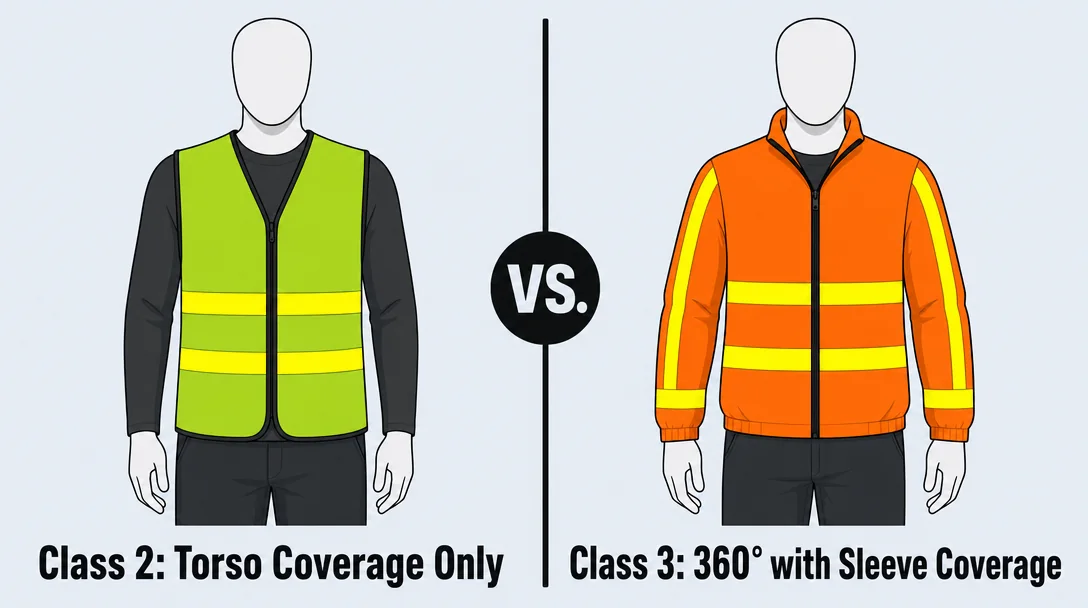
| Tape placement | Torso encirclement | Torso + sleeves or legs (360°) |
| Common garment types | Vests, short-sleeve shirts | Jackets, coveralls, long-sleeve shirts |
| Typical use cases | Warehouses, parking, surveying, airports | Roadwork, construction, emergency services |
| Traffic exposure context | Low-speed, well-separated from traffic | Higher-speed, active roadway exposure |
| Night / low-light suitability | Moderate | Maximum |
| Relative cost | Lower | Higher (more material, more coverage) |
Looking for certified high-visibility workwear?
Shop Class 2 safety vests, compare industry requirements, or request a bulk quote for custom logo and wholesale orders.
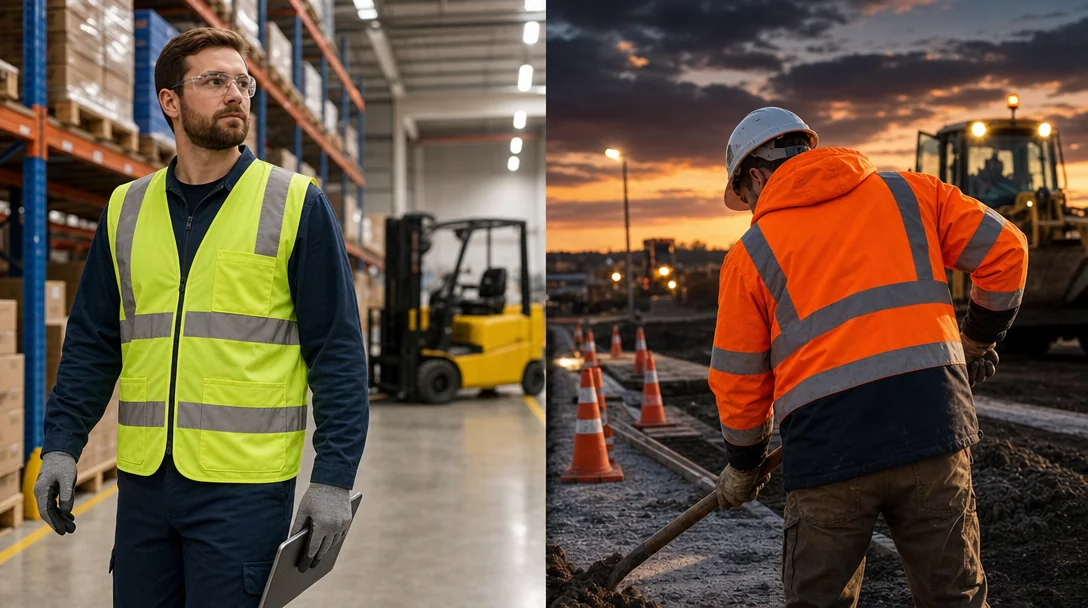
ANSI Class 2 safety garments provide a solid level of visibility for workers who need to be seen but are not in the highest-risk environments. If your workers are around vehicles moving at moderate speeds, or if visibility conditions are generally good with occasional challenges like overcast weather or twilight, Class 2 is typically the right specification.
Shop Class 2 safety vests to see our range of ANSI-compliant options.
Class 2 garments do not provide arm or sleeve coverage, which means workers are less visible from the side and rear in complex visual environments. They are also not suitable for high-speed traffic zones or for work in conditions where the background creates visual clutter — such as busy construction sites with multiple overlapping activities.
ANSI Class 3 is the highest visibility classification under the ANSI/ISEA 107 standard. These garments use more fluorescent background material and more reflective tape than Class 2, and critically, they require reflective coverage on the sleeves or legs. This 360-degree visibility makes the worker’s human form recognizable from any angle — a significant safety advantage in high-risk environments.
Shop Class 3 reflective jackets to browse our full range.
The primary advantage of Class 3 is the 360-degree visibility provided by sleeve or arm coverage. When a worker turns, reaches, or gestures, the reflective tape on the sleeves creates a recognizable human silhouette — something a torso-only vest cannot achieve. This is particularly important in environments where drivers or equipment operators need to identify a person (versus a static object) from a distance.
Class 3 garments also typically offer better weather protection since they are designed as jackets or coveralls rather than vests. This means your team gets both visibility and environmental protection in a single garment.
If you are still unsure which class your team needs, walk through this decision tree:
Rule of thumb: When in doubt, specify Class 3. It always exceeds Class 2 requirements, and the incremental cost is usually small compared to the safety benefit. For teams sourcing garments through wholesale or bulk orders, the per-unit price difference between Class 2 and Class 3 becomes even more manageable at scale.
If your supply chain spans multiple regions, you may also encounter the EN ISO 20471 standard, which is the European standard for high-visibility clothing. EN ISO 20471 also defines Class 1, 2, and 3 levels with comparable visibility requirements — Class 3 under EN ISO 20471 requires approximately 0.80 m² of fluorescent material and approximately 0.20 m² of retroreflective material, which is broadly similar to ANSI Class 3.
However, ANSI/ISEA 107 and EN ISO 20471 are not identical standards. They differ in testing methods, wash-cycle requirements, labeling formats, and the way garment types are classified. A garment that meets ANSI Class 3 does not automatically carry EN ISO 20471 certification — and vice versa. For buyers sourcing for international projects, it is important to verify which standard (or both) the end market requires.
Many manufacturers, including HSafetyJackets, produce garments that are tested and certified to both ANSI/ISEA 107 and EN ISO 20471 standards. View our certification comparison guide for an overview of the key differences and what to ask your supplier.
Through our experience supplying safety workwear to buyers globally, we see a few recurring specification errors:
Selecting the correct visibility class is a straightforward process once you have the right information. Here is a practical workflow for procurement teams:
Step 1: Assess worksite risk. Identify the vehicle speeds, traffic patterns, lighting conditions, and visual complexity of the worksite. Higher-speed roadway traffic and nighttime conditions point to Class 3. Low-speed, well-lit environments typically allow Class 2.
Step 2: Check local and state regulations. Many jurisdictions have specific requirements that go beyond the ANSI baseline. State DOTs, municipal procurement policies, and client-specific specifications can all mandate a minimum class. When in doubt, specify Class 3 — it always exceeds Class 2 requirements.
Step 3: Define quantity, sizes, and branding needs. Determine team size, size distribution, and whether you need custom logo printing or embroidery. Explore our OEM customization options for logo placement, color matching, and packaging.
Step 4: Request samples and quotes. Before committing to a bulk order, request physical samples to verify fit, material quality, and print quality. Contact our team with your worksite details and we will recommend the right ANSI class and garment type, with competitive wholesale pricing.
Yes — Class 3 exceeds Class 2 requirements, so wearing a Class 3 garment in a Class 2 environment is always compliant. However, Class 3 garments are typically heavier and more expensive. For indoor warehouses or low-risk environments, a Class 2 vest may be more comfortable and cost-effective. Consider upgrading to Class 3 if your worksite conditions may change to higher-risk scenarios.
Many roadway work zones reference Class 2 or Class 3 high-visibility garments depending on exposure, task, and local DOT requirements. For higher-speed traffic control and low-light conditions, Class 3 is commonly specified. Always verify your jurisdiction’s current requirements, as state-level specifications can be stricter than the federal baseline.
Class 2 is typically sufficient for indoor warehouse and logistics environments with low-speed vehicle traffic. Warehouse hi-vis requirements are typically determined through employer and site risk assessment, customer requirements, and applicable local rules. For outdoor yard operations with faster-moving vehicles, Class 3 may be more appropriate.
Class 2 requires approximately 201 square inches (0.13 m²) of retroreflective tape, commonly referenced under ANSI/ISEA 107-2020, typically arranged in horizontal bands around the torso. Class 3 requires approximately 310 square inches (0.20 m²) and must include reflective material on the sleeves or arms to provide 360-degree visibility. The additional tape area and sleeve coverage are what make Class 3 garments significantly more visible from all angles.
Yes — EN ISO 20471, the European standard for high-visibility clothing, also defines Class 1, 2, and 3 with comparable visibility levels. Class 3 under EN ISO 20471 is the highest level, requiring approximately 0.80 m² of fluorescent material and approximately 0.20 m² of retroreflective material. The material area requirements are broadly similar to ANSI Class 3, though the testing methods, labeling requirements, and wash-test protocols differ. Many manufacturers, including HSafetyJackets, produce garments that meet both standards. View our certification comparison guide for details.
No. ANSI Class 3 requires reflective coverage on the sleeves or legs. A vest — by definition a sleeveless garment — can only achieve Class 2. To reach Class 3, workers need a jacket with reflective sleeves, a coverall, or a long-sleeve shirt that meets the minimum material and tape area requirements. If your buyer or spec calls for “Class 3 vest,” clarify that the requirement is for a Class 3 jacket or shirt, not a vest.
Class 3 garments generally cost more than Class 2 because they use more fluorescent fabric, more reflective tape, and often include additional features like waterproof zippers or full-length sleeves. The exact price difference varies depending on the fabric type, brand, order quantity, and any custom printing or embroidery. For bulk and wholesale orders, the per-unit gap narrows significantly. Request a quote with your team size and specification to get accurate pricing for your specific requirements.
This guide provides general information about ANSI/ISEA 107 visibility classes and common roadway guidance. It is not a substitute for official regulatory advice. Always verify applicable requirements with your local jurisdiction, state DOT, or qualified safety professional.
Whether your team needs Class 2 safety vests for warehouse operations or Class 3 reflective jackets for road construction, HSafetyJackets offers a full range of ANSI/ISEA 107 and EN ISO 20471 certified garments. We supply safety workwear to buyers in over 60 countries, with custom logo printing, competitive bulk pricing, and documented certification for every order.
Share your team size, worksite conditions, and compliance requirements. We will recommend the right hi-vis class and provide a detailed quote within 24 hours.
Browse safety jackets, compare certification requirements, or send your quantity and logo requirements for a bulk quote.
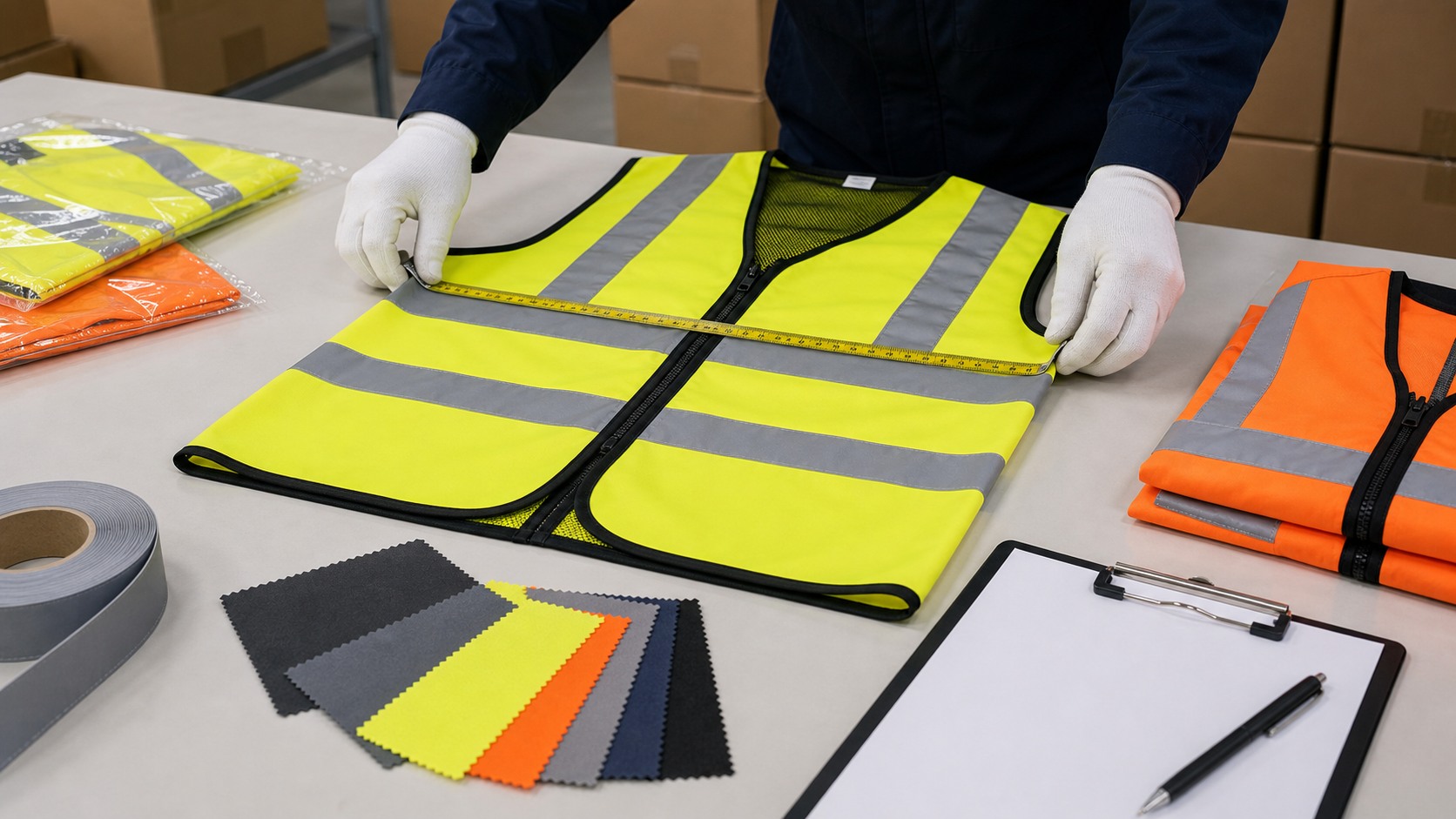
Use this safety vest sample approval checklist before bulk production to review fit, fabric, reflective tape, logo placement, labels, packaging, QC...
Read More: Safety Vest Sample Approval Checklist Before Bulk Production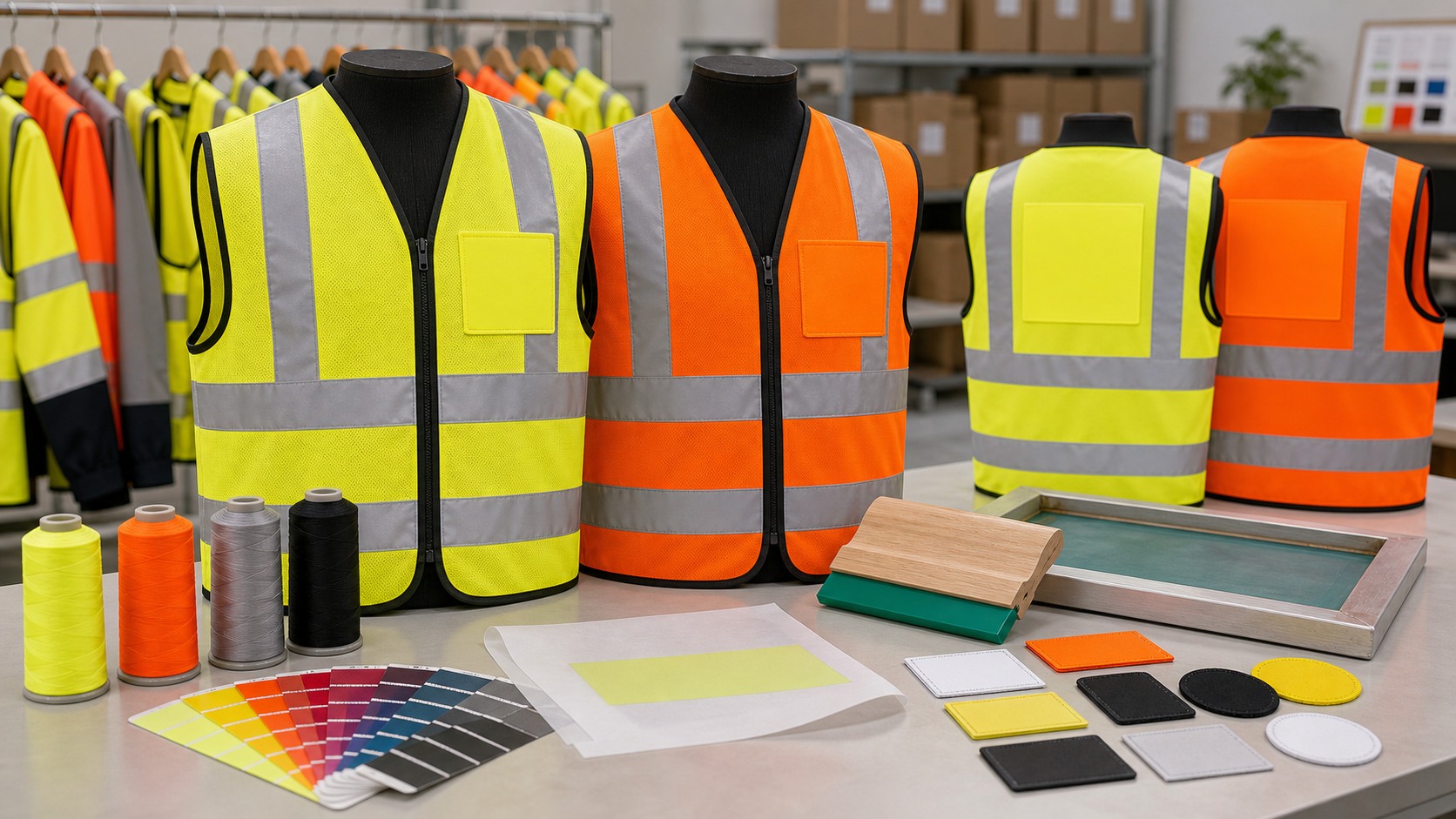
Compare logo printing methods for safety vests, including screen print, heat transfer, patches, labels, artwork review, logo placement checks, and...
Read More: Logo Printing Methods for Safety Vests | Screen Print vs Heat Transfer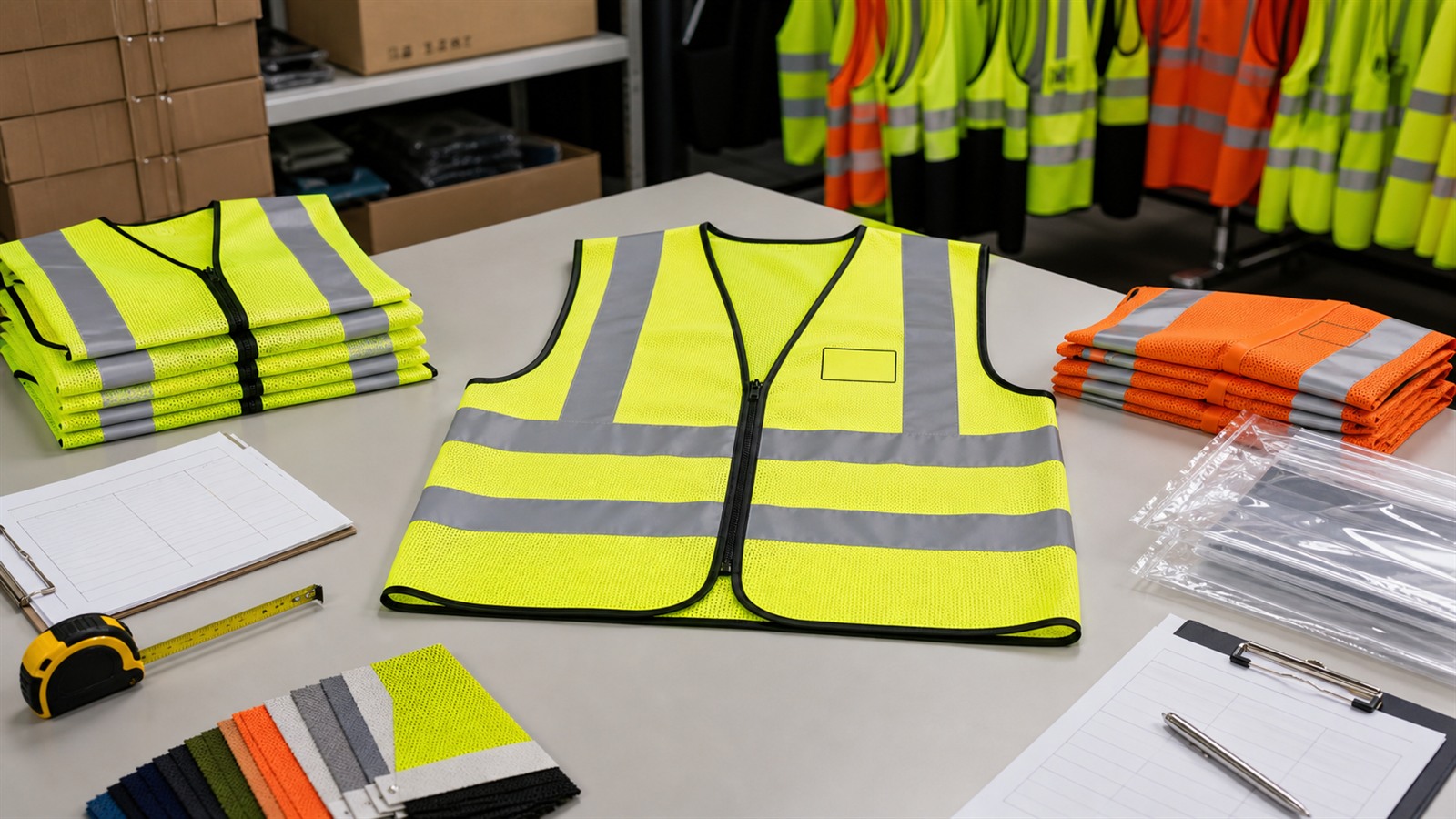
Plan an ANSI Class 2 safety vests bulk order with RFQ details for specifications, logo placement, size mix, samples, documentation, and supplier...
Read More: ANSI Class 2 Safety Vests for Bulk Orders | RFQ Buyer Guide